
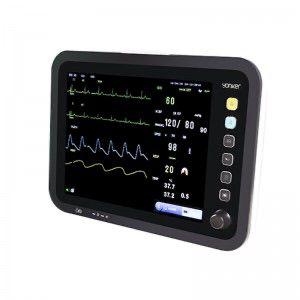
How to Choose a Patient Monitor for Your Clinic or Hospital
A patient monitor shows a patient’s vital signs continuously and alerts staff when something changes. Clinics, day-surgery centres, emergency rooms and ICUs all rely on them. This guide explains what to check before you buy.
1. Which parameters do you need?
Most multi-parameter monitors measure:
- ECG – heart rhythm
- SpO2 – blood oxygen saturation
- NIBP – non-invasive blood pressure
- Respiration
- Temperature
Intensive care and theatres may need extra options such as capnography (EtCO2) or invasive blood pressure. Match the monitor to the patients you treat.
2. Screen size
A smaller screen suits bedside use in clinics and transport. A larger screen is easier to read from across a room and suits ICUs and recovery areas where staff watch several values at once.
3. Alarms
Check that alarms are clear, adjustable and both visual and audible, so staff notice changes quickly.
4. Battery and portability
A built-in battery keeps monitoring going during power cuts and when moving a patient. Ask about battery life on the specification sheet.
5. Data and connectivity
Some monitors store trends and can connect to a central station. Decide whether you need this now or later.
6. Service and support
Monitors need regular calibration and checks. Choose a supplier that offers installation and maintenance in the UAE.
For spot checks: pulse oximeters
For quick checks in clinics, pharmacies and home care, a fingertip pulse oximeter is often enough.
Patient monitors from Medora
Medora Medical Supplies supplies Yonker multi-parameter patient monitors in 8-inch and 12-inch sizes and Yonker pulse oximeters for hospitals, clinics and home care across the UAE, with installation and maintenance support. See all patient monitoring equipment or contact us on +971 52 650 3221 or sales@medora.ae.
Featured products
Leave a comment